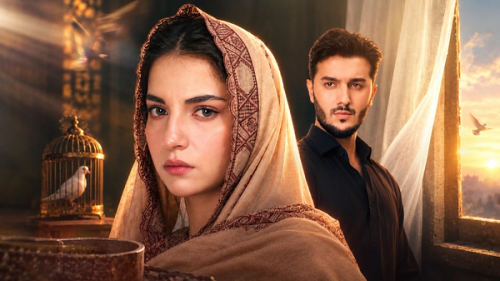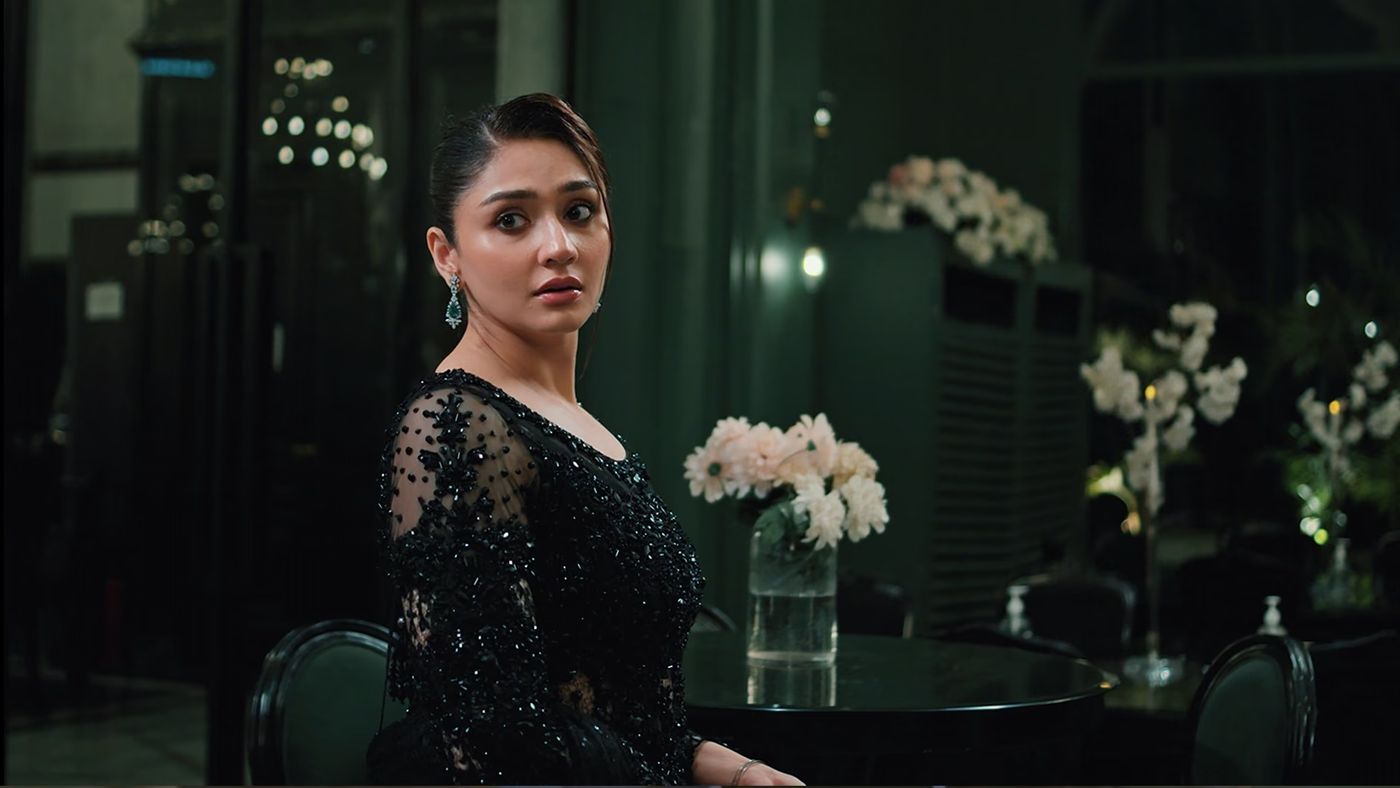
If you've been following the Pakistani dramas of late you'll have certainly come across Dar-e-Nijaat. The ARY Digital serial has been generating a lot of buzz since it launched and tells the story of Dur-e-Fishan Saleem, Sheheryar Munawar and Nameer Nawaz Khan. It's a story of heartbreak, of tough choices and of the potential for redemption.
There's more to this drama than just a popular cast and some very emotive scenes. It's written by Umera Ahmed and directed by Saqib Khan. It's about what happens when love breaks down, trust is lost and people have to make the choice as to whether they're going to stay in their pain or actually move on.
And honestly that's what makes its story worth talking about.
Dar-e-Nijaat Is Making Waves on ARY Digital
One thing that has helped Dar-e-Nijaat stand out is the audience response. It premiered on 1st August 2026 and airs every Friday and Saturday at 8pm on ARY Digital.
Its first episode has drawn millions of views on the channel's official YouTube channel and it's been a feature in the weekly TV ratings discussions. An entertainment chart for the week of 5th to 11th October recorded a TRP of 16.8, which is the highest figure it's achieved on that chart to date.
That's a positive result, though of course we must always bear in mind that ratings figures have to be looked at in the context of the source and the methodology employed.
The online response tells its own story as well. You can watch the episodes via ARY Digital's official platforms and the emotional impact of the episodes has given the fans loads to talk about between the weekly episodes.
Of course high view figures don't necessarily equate to a masterpiece. But if you've got people watching, people sharing scenes, people talking about the characters in the show then you've clearly got their attention.
Dur-e-Fishan Saleem Brings Zaryab's Story to Life
At the heart of Dar-e-Nijaat is Zaryab (played by Dur-e-Fishan Saleem). She starts off as a young woman with dreams, a loving relationship and a future which seems absolutely bright.
Then it gets painful.
Zaryab's relationship with her childhood friend and lover Zamil is the source of the heartbreak. It's not simply a story about a break-up. It's a story about the damage that can be done to your perception of love, of relationships and of yourself when someone you trust changes your understanding of all of those things.
Dur-e-Fishan has a lot of that emotional arc. Zaryab has to grapple with anger, with disappointment and with the process of working out what comes next. It's not always a clean or simple journey which is what makes her such an interesting character to follow.
One of the big questions with Zaryab is whether moving on means forgiving someone, learning to live with what's happened or simply deciding not to let the past dictate every single one of your decisions.
These are no easy questions and the drama allows its lead character the space to grapple with them.
For those who've been following Dur-e-Fishan's previous work, Dar-e-Nijaat is another chance to see her deal with a character whose emotional arc is the engine of the film.
Sheheryar Munawar's Abu Bakar Is More Than Just a Love Interest
Sheheryar Munawar is Abu Bakar and his world is very different to Zaryab's.
Abu Bakar is the man of faith, discipline and personal responsibility. He brings a very different energy to the drama than the confusion and emotional chaos we see in Zaryab and Zamil.
But what makes Abu Bakar so interesting is the question of what his presence actually means for Zaryab's journey.
Can someone else's kindness actually help you to see the world differently after you've been hurt? Can a relationship of respect and understanding offer something that a relationship of pure passion could not?
These are some of the ideas the drama prompts the viewer to think about.
Abu Bakar has in fact generated a bit of a debate amongst the viewers. Some people quite like his calm demeanour and the way he sticks to principle, others feel that he is rather unrealistic as a character.
That's a discussion to be had. Fiction doesn't necessarily have to be an accurate reflection of real life but it can be far more engaging when the characters are faced with a test of their values and their decisions have real consequences.
Nameer Nawaz Khan Makes Zamil's Role Important
A story about heartbreak is all about the central character in that heartbreak and Zamil (played by Nameer Nawaz Khan) is very much the central character in Dar-e-Nijaat.
Zamil's relationship with Zaryab is what gives the story so much of its emotional substance. The significance of that relationship is that betrayal from someone you've known for years tends to cut deeper.
Rather than just presenting it as a good guy vs bad guy story, it's really about relationships, errors and the consequences of individual decisions.
That doesn't mean every action has to be excused or forgiven. To understand why a character behaves as they do is quite different from condoning what they do.
This is of course central to the play's themes. It enables the audience to question Zamil's decisions as much as it enables them to consider the emotional consequences of the relationships which surround him.
The supporting cast (Sania Saeed, Saba Hameed, Romaisa Khan and Sahar Hashmi) all add considerably to the story and go a long way towards fleshing out the world in which these characters exist.
What is Dar-e-Nijaat really about?
On the surface it's a love story, a story about love and heartbreak and relationships that don't work out. The real themes are about faith, forgiveness, accountability and the process of finding peace after the emotional hurt.
The very title points to the idea of salvation or deliverance. As the narrative progresses that notion of salvation becomes relevant not just in the context of romantic relationships but in relation to the way people deal with their own mistakes and the mistakes of others.
One of the fundamental questions of the drama is actually quite simple: when someone has deeply hurt you, what does it actually look like to move on?
Is forgiveness always necessary? Does forgiving someone mean you're allowing them back into your life? Can a person actually change after causing you pain?
These are particularly interesting questions as Pakistani dramas are very much geared towards exploring themes of betrayal and revenge. The journey to healing however can be just as fraught as the original conflict.
*Dar-e-Nijaat* puts faith and personal development at the heart of that discussion. It's asking the audience to reflect on whether it's actually possible for kindness, patience and understanding to make a difference when anger and resentment seem so much more accessible.
The best bits of this sort of story are the instances where the characters have to face up to the uncomfortable truth about themselves rather than just blaming everybody else.
The OST Adds to the Emotional Impact
Any discussion of a Pakistani drama is going to be incomplete without a mention of the soundtrack and Dar-e-Nijaat is no different in that respect. It has an OST called 'Alvida Alvida' by Nabeel Shaukat Ali and Osaf Fateh Ali Khan.
The song is perfectly suited to a narrative about separation, disappointment and the sheer emotional weight of letting go. A good drama score doesn't necessarily need to explain every emotion on screen. Sometimes it's sufficient for the music to just make you linger a little longer on a scene.
For fans who like to listen to the drama OSTs separately from the episodes, the song provides another way of engaging with the emotional landscape of the show.
The drama also has a visual style which allows the characters and their world to breathe. It's not all dialogue either and the quieter moments can be very effective in establishing the atmosphere of the piece.
What Are Pakistani Drama Fans Saying?
As Dar-e-Nijaat has gone on, the characters have become a subject of conversation amongst the viewers.
Zaryab's decisions have triggered all sorts of discussion around independence, emotional recovery and the expectations that are placed on women after a very difficult relationship. Some people are talking about Abu Bakar's values and the kind of support he gives, others are asking whether Zaryab should be able to go on and rebuild her life without necessarily having to do so through a new relationship.
That last point brings up an important difference.
A character getting support from someone else doesn't in any way mean the narrative is saying she can't heal on her own. It's perfectly valid for the viewer to wonder whether the drama actually gives the female lead the space to grow in her own right.
Dur-e-Fishan herself spoke to the wider discussion around Zaryab's journey in September, explaining that the story is about the different yardsticks that society applies to men and women when it comes to error, forgiveness and redemption.
This is one of the reasons the drama is so much more than just a question of who ends up with whom. The characters themselves are ripe for discussion in terms of responsibility, personal development and the myriad ways people react to emotional suffering.
Of course not every viewer will agree with every character's decisions. That's part of the appeal of a story that doesn't offer easy answers to difficult questions.
Can Dar-e-Nijaat Keep Going?
A strong early viewership can give a drama a good start, but maintaining interest over the long term across many episodes is another matter entirely.
We've all seen dramas start off with a good premise and then go off the rails when the conflicts become formulaic and the characters don't really develop.
For now, Dar-e-Nijaa gives Pakistani drama fans plenty to think about beyond the usual romance and heartbreak. It asks whether people can change, what forgiveness really means and how someone begins again after life doesn't turn out the way they expected.
What do you think about Dar-e-Nijaat so far? Are you rooting for Zaryab and Abu Bakar, or do you think the drama needs to explore Zaryab's independent journey more deeply? Share your thoughts in the comments on Agahi Talks!
Dar-e-Nijaat on ARY Digital stars Dur-e-Fishan Saleem, Sheheryar Munawar and Nameer Nawaz Khan. Explore the story, cast, OST and audience response.
Disclaimer
This is a fan-made analysis and analysis based on publicly available details. We create original, transformative works for entertainment purposes only. All rights belong to the original creators and production houses.